What happened · Troy-Bilt
What Happened to the Troy-Bilt Horse Tiller?
The rear-tine tiller America bought by mail-order coupon, the 1982 boardroom coup, the 2001 bankruptcy, and who owns Troy-Bilt today.
- Built in
- Troy, New York
- Sold by
- Mail-order coupon, later dealers and stores
- Famous model
- The Horse (rear-tine tiller)
- Today
- A Stanley Black & Decker brand
Ownership timeline
- 1930C. W. Kelsey founds the Rototiller Company in New York City
- 1961Former employees start Watco Machine Products in Troy, New York
- 1968The Trojan Horse tiller becomes the Troy-Bilt; Watco becomes Garden Way
- 1982Founder-marketer Lyman Wood is pushed out
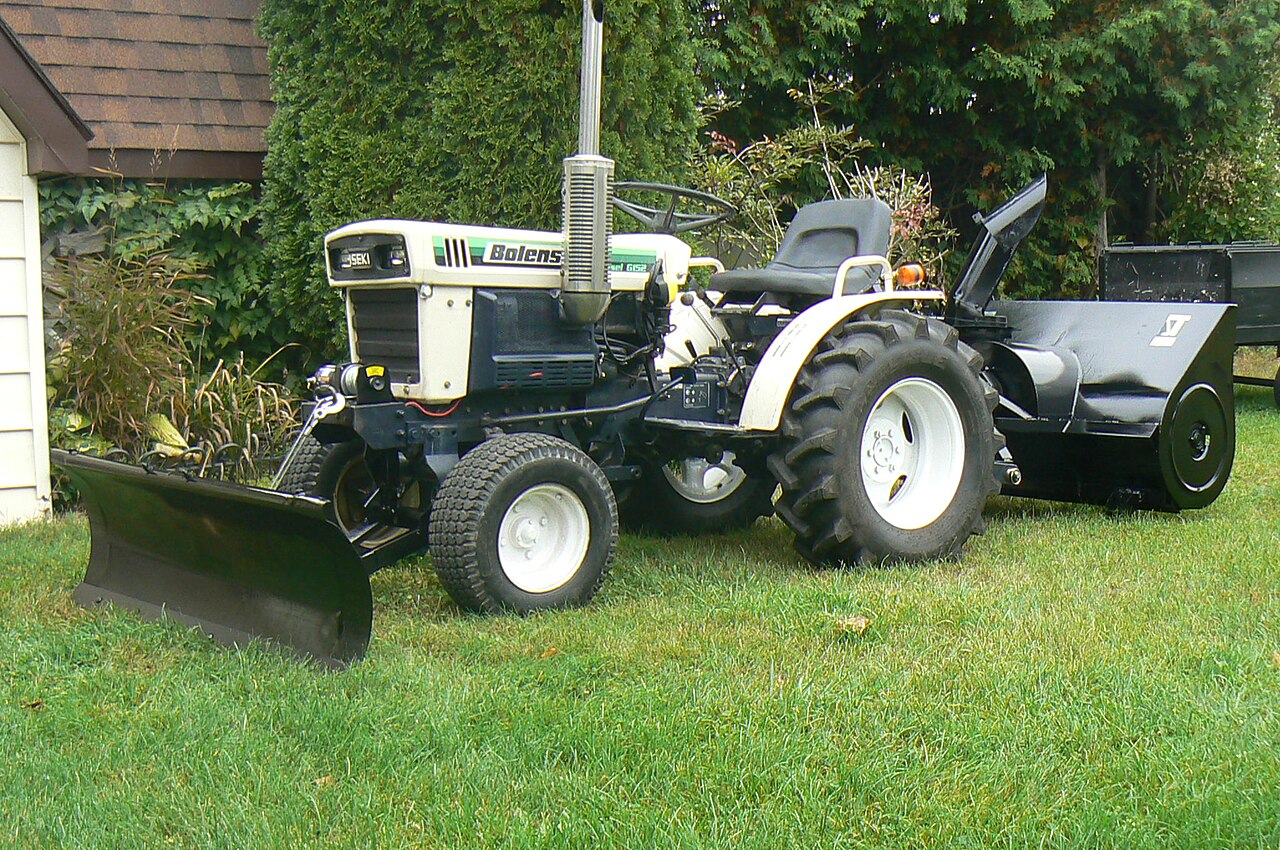
- 1989Garden Way buys Bolens and adds Troy-Bilt lawn tractors
- 2001Garden Way goes bankrupt; MTD buys Troy-Bilt for about 44.1 million dollars
- 2021Stanley Black & Decker buys MTD
The tiller you bought with a coupon
Most owners remember the advertisement before the machine. It ran month after month in Organic Gardening, and in Popular Science and Mother Jones too. Two drawings sat side by side: an ordinary front-tine tiller that, in the ad's words, shook the living daylights out of you, and the Troy-Bilt, with its tines at the rear and the engine driving the wheels. The headline promised you could guide it with just one hand.
There was no price in the ad. You filled in a coupon, mailed it to the factory on Ninth Avenue in Troy, and a letter came back with prices and a deadline. That reply letter became famous in its trade: Richard Hodgson later reprinted it among what he called the greatest direct mail sales letters of all time.
What made the Horse different
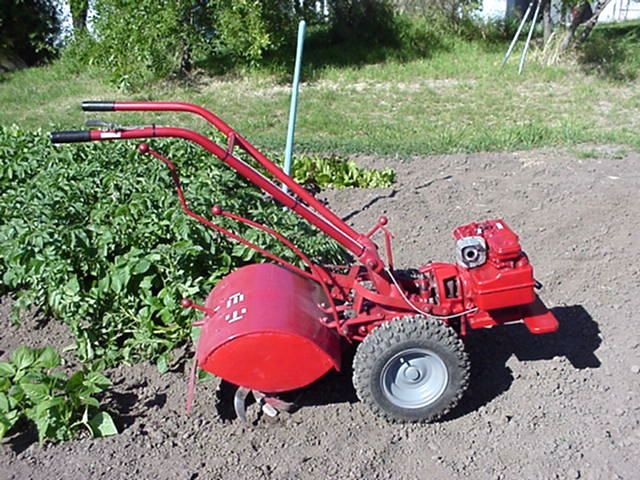
You walked beside the Horse rather than behind it. The handlebars swung to one side, so there were no footprints or wheel marks in the fresh soil, and a hood covered the tines.
- Depth could be set to seven levels, even while moving (a 1978 homestead-tools guide).
- Four speeds by 1979, and a "whisper quiet power reverse" advertised by 1982.
- Wheel speeds of about 0.7 to 1.7 miles an hour, measured by James Underwood Crockett.
- The six-horsepower Horse cost 600 to 800 dollars in 1979.
Where Troy-Bilt came from
The rotary tiller idea was patented by Konrad von Meyenburg of Basel, Switzerland, in 1910. In 1930 C. W. Kelsey founded the Rototiller Company in New York City and, by 1937, was building tillers in Troy. The business passed through Porter-Cable and Rockwell before former employees brought it home in October 1961 as Watco Machine Products. Their rear-tine model was called the Trojan Horse. After a 1968 trademark challenge it became the Troy-Bilt, and Watco became Garden Way Manufacturing.
The mail-order machine behind the brand
Lyman Wood, a Vermont entrepreneur who had first sold farm carts by mail, built Garden Way into a direct-marketing company. Buyers sent a deposit of about 20 percent to reserve a tiller before it shipped. Garden Way said selling direct kept the price at least 125 dollars lower than store selling would. By 1984 it was a company of more than 60 million dollars a year, and by the mid-1990s it had a file of more than 700,000 registered Troy-Bilt owners.
The final piece was a "no-time-limit" promise, plus a half-price factory rebuilding agreement.
Why Troy-Bilt really declined
The usual story blames cheap big-store tillers. The record points to two numbers inside the business.
The first is time. The EPA estimates a household tiller runs about 17 hours a year, with a median working life of 5.8 years. Garden Way sold a promise with no time limit at all, which removed the usual reason to replace the machine. The company needed a steady supply of first-time buyers.
The second is the audience. The national gardening poll peaked in 1981 at 38 million households, 47 percent of the country. By 1985 it had fallen to 33 million. Fewer new gardeners meant fewer new names for the coupon.
Then, in February 1982, Lyman Wood was pushed out of his own company. Staff called it Black Thursday. No published source explains why.
From mail order to bankruptcy
Garden Way went looking for growth elsewhere. Troy-Bilt lawn tractors arrived in 1989, the same year Garden Way bought Bolens. In 1995 it announced it was buying StairMaster. By 2001 Troy-Bilt machines were sold through dealers and chains such as Ace Hardware and Sam's.
At the end of July 2001 Garden Way filed for Chapter 11 in Wilmington, Delaware, closed its Troy operations and laid off 550 workers. Debts were above 100 million dollars. MTD of Cleveland bought nearly everything, including the Troy-Bilt and Bolens names, for about 44.1 million dollars in cash.
Who owns Troy-Bilt today
MTD ran the brand as Troy-Bilt LLC from Ohio. It reached Lowe's by 2005 and The Home Depot in March 2019. On December 1, 2021, Stanley Black & Decker bought the remaining 80 percent of MTD for about 1.5 billion dollars, and Troy-Bilt was one of the brands it named.
If you still own an original Horse, note that MTD limited coverage of Garden Way products to ten years from purchase and did not honor the half-price rebuilding agreement. Parts and manuals for older machines are still widely traded, which is why so many Horses are still turning soil today.
Quick questions
Is Troy-Bilt still in business?
Yes, as a brand. MTD bought the Troy-Bilt name out of Garden Way's 2001 bankruptcy, and Stanley Black & Decker bought MTD in December 2021. Troy-Bilt equipment is sold at Lowe's and, since 2019, The Home Depot.
Who made the original Troy-Bilt Horse?
Garden Way of Troy, New York, which grew out of Watco Machine Products. The tiller was first called the Trojan Horse and was renamed Troy-Bilt in 1968.
What did a Troy-Bilt Horse cost new?
Gardening writer James Underwood Crockett priced the six-horsepower Horse at 600 to 800 dollars in his 1979 book on garden tools.
Does MTD honor the old Garden Way lifetime warranty?
No. After 2001 MTD said it would cover Garden Way products for only ten years from purchase and would not honor the half-price factory rebuilding agreement.
Sources
- Vermont Life
- Popular Science (Jan 1982, 1981, 1990)
- Organic Gardening advertisements 1979-1986
- James Underwood Crockett's garden-tools book (1979)
- Gas Engine Magazine (1999)
- Bob Stone and John Storey direct-marketing books
- National Gardening Association / Gallup gardening polls
- EPA small-engine estimates (2010)
- CPSC recall notice (May 2001)
- New York Times (Mar 1995)
- MTD warranty notice
- Stanley Black & Decker annual report.
Every fact on this page comes from these sources. Where sources disagree we say so. Tell us if something is wrong and we will correct it and note the change.